
Marketing
Brand Partnerships vs Paid Ads: ROI
Compare paid ads, brand partnerships, and hybrid strategies to see which delivers better short- and long-term ROI.
Brand Partnerships vs. Paid Ads: Which Drives Better ROI?
Looking to maximize your marketing ROI? Here's a quick strategy comparison:
Paid Ads deliver fast, measurable results but rely on constant spending. They're ideal for short-term growth and precise targeting, though rising costs make scaling expensive – Meta's CPM’s having risen across most verticals (Triple Whale 2025 data shows median CPM of $13.48). [1]
Brand Partnerships build trust and long-term value. One mode through which this is achieved is through brands and creator partnerships – these outperform paid ads on repeat purchases by 20-35%. However, success takes time and strong partner alignment. [1]
Hybrid Strategies (like creator-driven ads) combine the strengths of both, often achieving higher CTRs and lower CPAs by blending trust with paid reach,. [2] [3] often delivering the best ROI.
Key Takeaways:
Paid ads are great for quick wins but stop working when the budget stops.
Partnerships create lasting impact through stronger customer retention.
Combining both methods often delivers the best ROI.
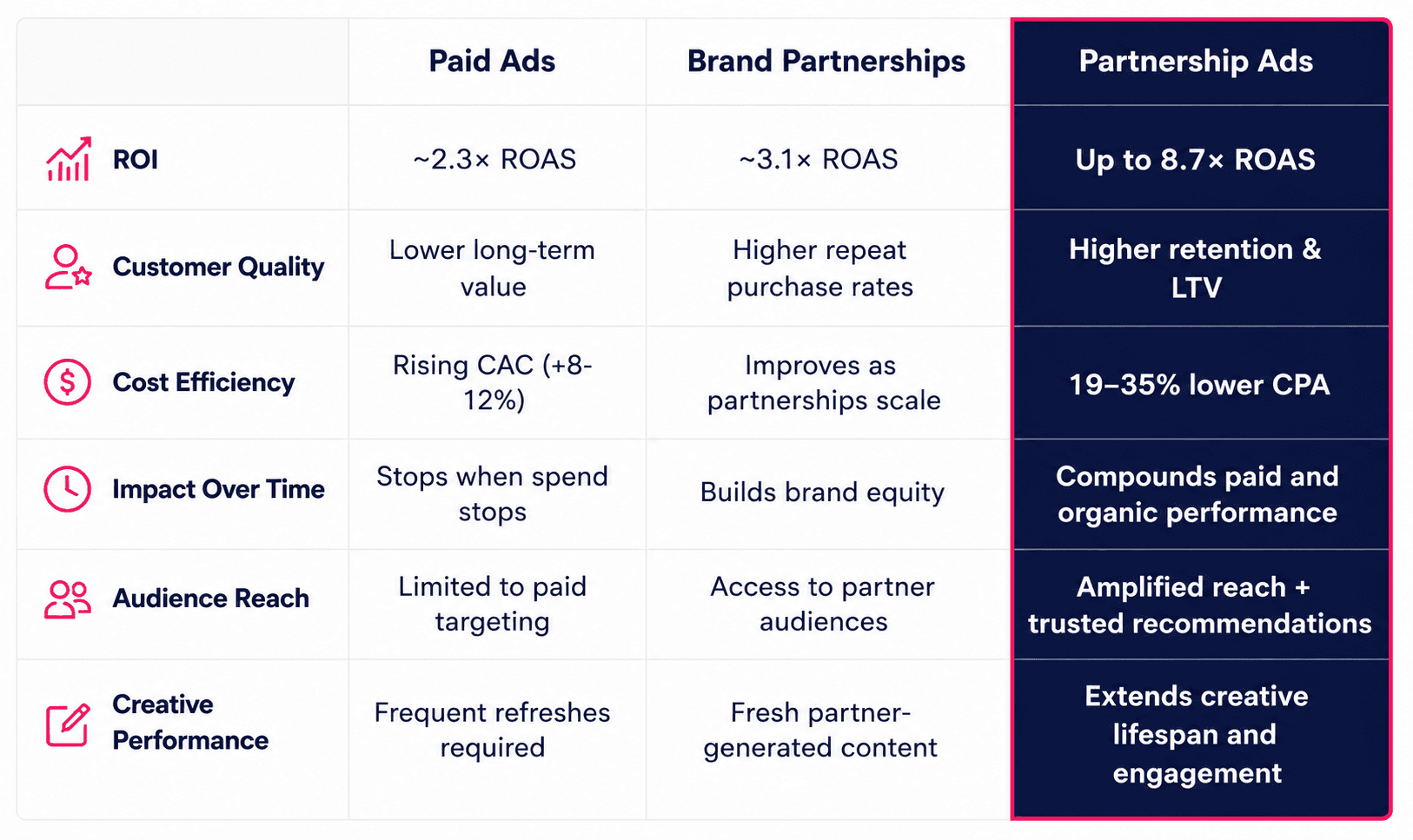
Bottom Line: If you're after fast results, paid ads are a solid choice. For sustainable growth, partnerships win. Using both methods strategically gives you a significant advantage
📣 Paid ADs Vs. Influencer Marketing... What's The REAL Scoop Here? Get The Info You Need 💡
Brand Partnerships and Paid Ads: What Sets Them Apart
Before diving into ROI comparisons, it's crucial to grasp how these strategies operate and what makes them distinct.
What Are Brand Partnerships?
Brand partnerships involve two businesses — or a brand and a creator — joining forces to achieve shared goals by leveraging their combined audiences, credibility, and resources. [8] These collaborations can take various forms, such as co-branded product launches, affiliate programs, or influencer-driven campaigns where creators introduce your product to their established followers.
What makes partnerships stand out is their approach to reaching people. Instead of disrupting someone's feed with ads, they build on the trust that already exists between the partner and their audience. Trust is a significant factor: 61% of consumers trust influencer recommendations, [9] and 69% trust suggestions from peers. [10] As David Yovanno, CEO of impact.com, explains:
"Partnerships hinge upon garnering a trusted, positive reaction from audiences, which is key to the beginning (and maintenance) of any impactful relationship." [8]
Another unique aspect of partnerships is how their impact grows over time. Unlike paid ads, which stop delivering the moment you stop spending, partnerships create a compounding effect. For example, Purple Carrot, a plant-based meal kit service, scaled its affiliate program to drive a 68% increase in orders and a 30% boost in ROAS in just one quarter. [8]
What Are Paid Ads?
Paid advertising is all about buying visibility on platforms like Meta, Google, or TikTok. Using bidding systems and algorithms, you set a budget, define your audience, and let the platform target users who either match your criteria or, increasingly, who the algorithm predicts will convert. There is no certainty that high intent users will be targeted.
This approach follows a linear model: you spend money, you get results - relative to the strength of your product and the ad itself. Stop spending, and the flow of traffic halts immediately. The performance of paid ads depends heavily on creative quality — on Meta, the ad creative accounts for three times more performance variance than audience targeting. [11] To keep up with ad fatigue — which usually sets in after 10 to 14 days — brands now produce 15–20 new creative assets every month. [11]
Paid ads do offer speed and control advantages that partnerships can't easily replicate: speed and control. You can launch a campaign today and start analyzing conversion data within 48 hours. However, this control comes at a rising cost.
ROI Compared: Metrics, Examples, and Key Differences
Measuring ROI effectively means using the right metrics for each strategy. Here's a quick breakdown of some of the most useful ones:
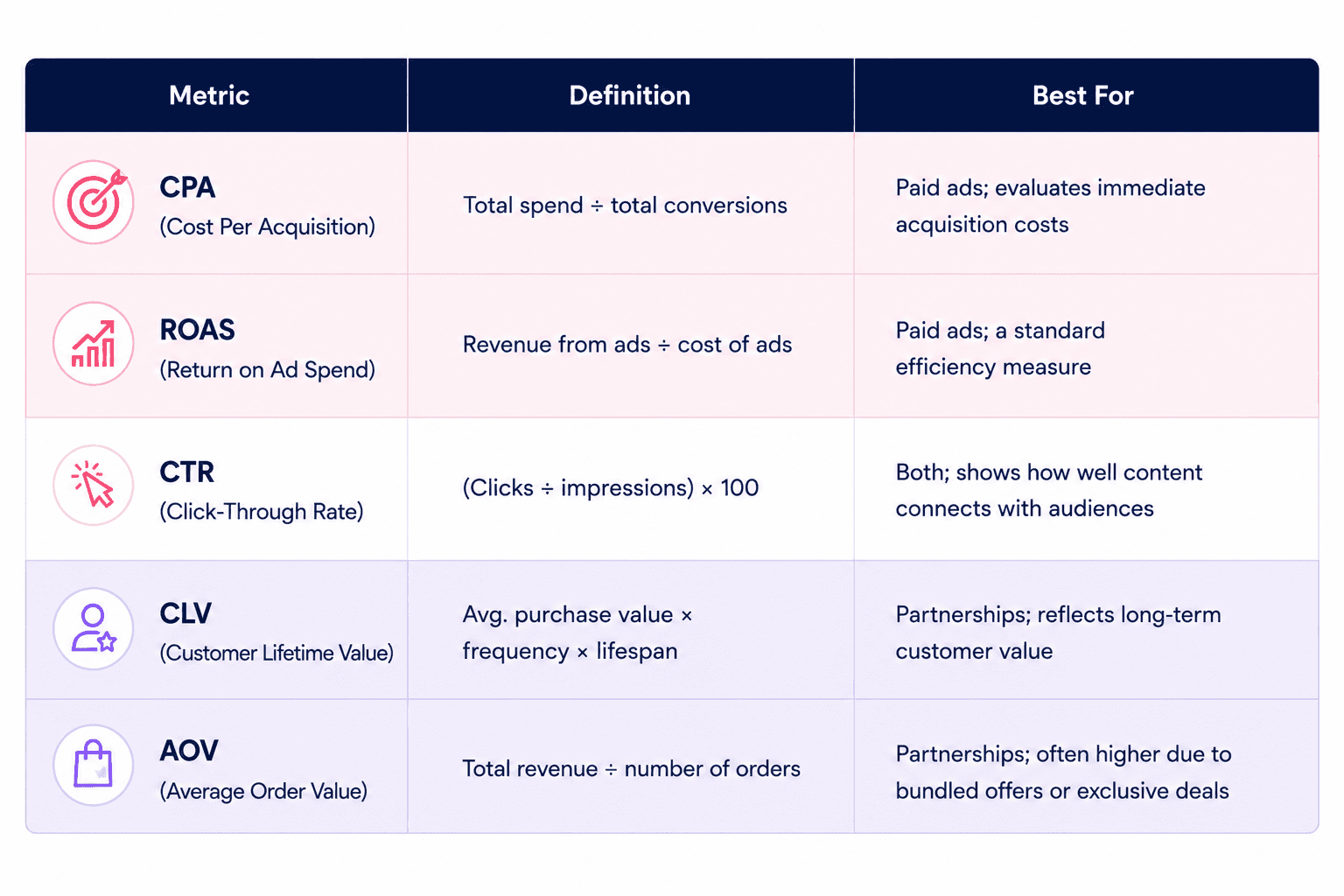
For paid ads, CPA and ROAS are the go-to metrics, focusing on short-term results. On the other hand, partnerships shine with metrics like CLV and repeat purchase rates, which require a longer time frame - think 6 to 12 months - to fully capture their value. Evaluating partnerships over just 30 days often misses the bigger picture [12].
Another key difference lies in attribution. Paid ads typically use last-click attribution, which is straightforward. Partnerships, however, involve a longer trust-building process, making multi-touch attribution essential to properly measure their impact [12][13].
Let’s see how these metrics play out with an actual example.
Case Study: Brand Partnerships vs. Paid Ads in Action
Take Purdy & Figg, a wellness brand based in the UK. In early 2026, they ran a 60-day Meta Partnership Ads campaign, promoting their products through creator accounts instead of their own brand page. The results were striking [3]:
555% increase in revenue
468% growth in purchases
35% lower CPA
What made the difference? It wasn’t just the budget - it was trust. Ads run through creator accounts combine the power of social proof with precise targeting, creating higher engagement. This approach doesn’t feel like traditional advertising, which is why it performs so well.
"A viral video with an affiliate link can provide a long-term play with way more money than you could have gotten from the flat fee." - Marie Montano, Senior Manager of Creator Relations, impact.com [14]
This example sets the stage for a direct comparison of strategies.
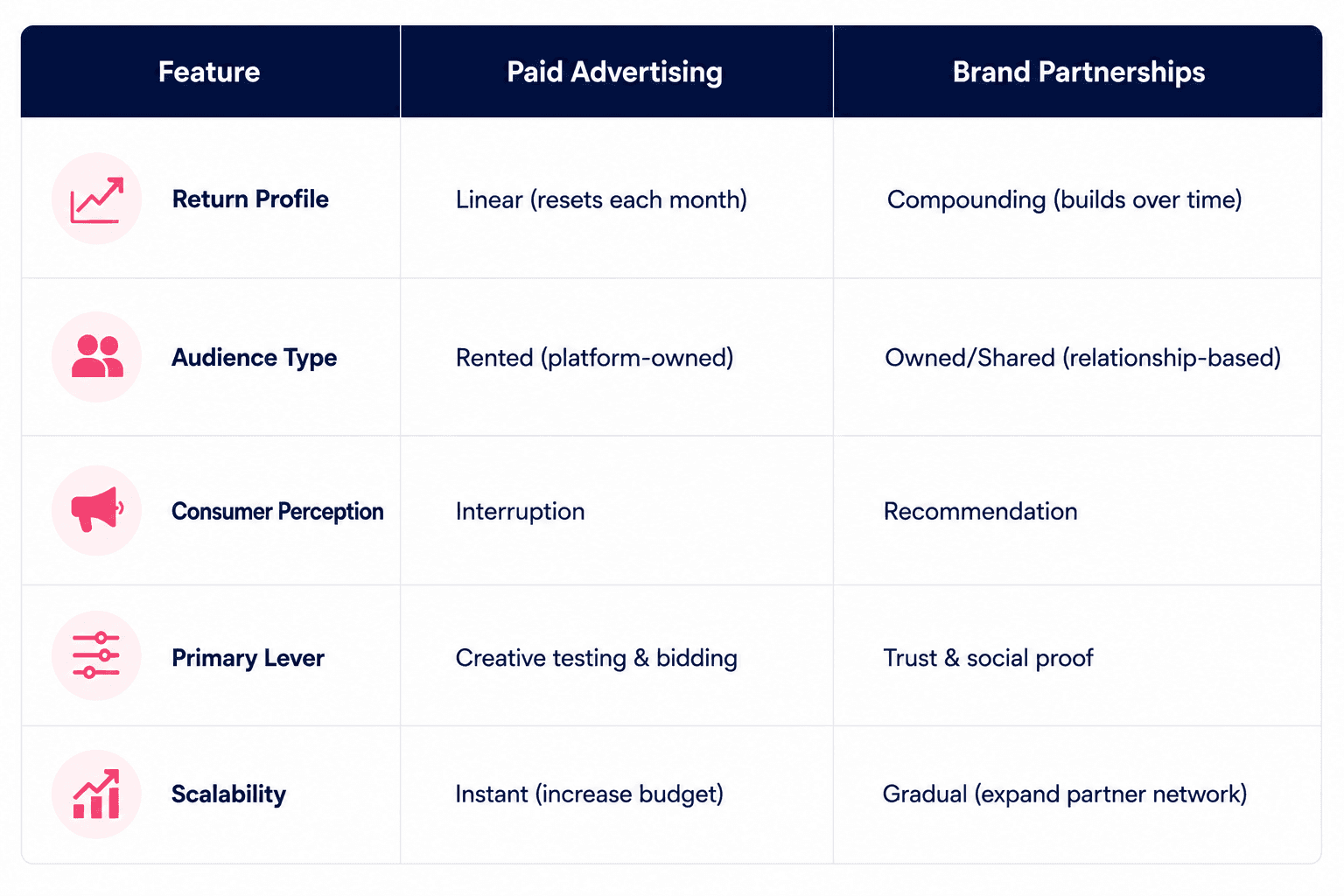
Comparison Table: Brand Partnerships vs. Paid Ads
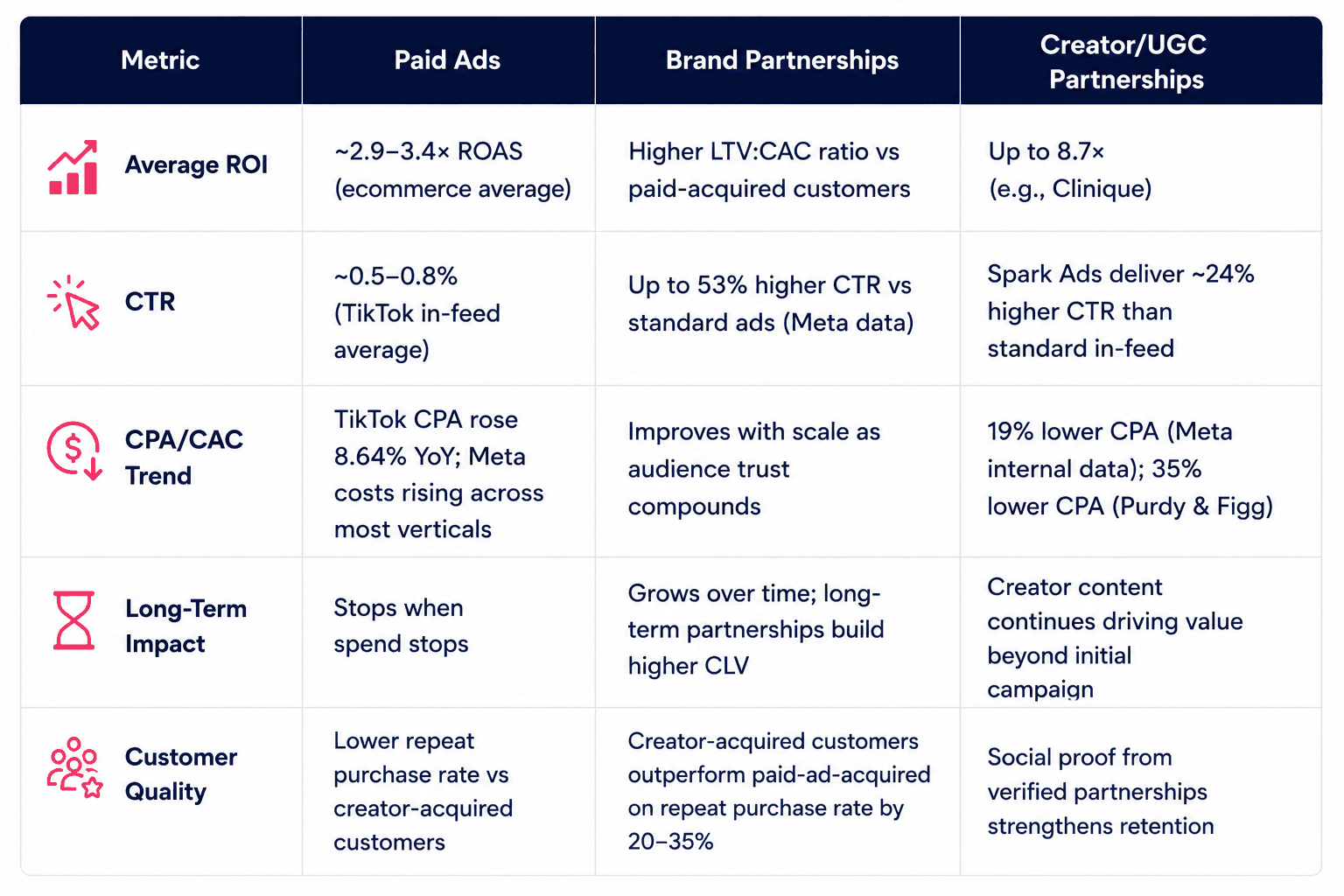
The takeaway? Paid ads are all about speed, delivering quick results. But partnerships excel in efficiency and customer quality, especially over the long haul. The hybrid model - using creator content as paid ads - blends the best of both worlds, offering the short-term impact of ads with the lasting value of partnerships.
How to Get Better ROI from Each Strategy
Getting More from Brand Partnerships
Many DTC brands approach partnerships as one-off campaigns. However, the brands that see the best results focus on building ongoing relationships with partners who share similar values and target complementary audiences. A clear example being Dormify and American Eagle who are both targeting aesthetics driven 18–22-year-olds. [15]
Here’s a simple 30-day plan to kick things off: spend the first 10 days scouting and pitching 2–5 potential partners, the next 10 days drafting agreements and setting KPIs, and the final 10 days testing the collaboration before deciding to scale [16]. This step-by-step approach minimizes risk while providing real performance insights.
To keep costs in check, consider working with micro-influencers. On TikTok, creators in the 10,000–100,000 follower range typically charge $200–$1,500 per video [17] a fraction of the cost of macro or celebrity placements — while delivering approximately 60% higher engagement rates than mega-influencers and costing around 65% less per engagement than macro-influencers [18]. For DTC brands working with defined budgets, this makes micro-influencers the stronger choice for conversion-focused campaigns, where audience trust and niche alignment matter more than raw reach.
Improving Paid Ad Performance
Average Meta CPA across ecommerce ranges from approximately $30–$37 (MHI Growth Engine, 2026).", improving ROI on paid ads means focusing on creative strategies and smart budget management. [15] Creative content is your most powerful tool. Ads led by founders deliver an average ROAS that is 3.4× higher than traditional UGC and 62% higher than polished studio ads. [11] Across hundreds of DTC brands analyzed by MHI Media, founder-led creative generated the highest average ROAS among major ad formats, outperforming both traditional UGC and polished studio-produced ads.
Ads that start with question-based or pattern-interrupt hooks outperform product-first hooks by 2.4× in the first three seconds. [11] Since ad performance on Meta can decline by 50% within just 14 days, it is critical to refresh your creative every one to two weeks and test three to five new variations weekly. [11]
For budget allocation, try the 70/20/10 rule: dedicate 70% to proven channels, 20% to scaling initiatives, and 10% to testing experimental formats. [16] Establish ROI thresholds, like a minimum 2:1 ROAS for conversion campaigns, and use automated tools to redirect spending from underperforming awareness campaigns to high-performing bottom-funnel assets. [17]
Hybrid Strategies: Pairing Partnerships with Paid Ads
Combining the long-term value of partnerships with the quick results of paid ads can take your ROI to the next level. Instead of choosing one over the other, integrating them can deliver even stronger outcomes.
In 2026, A "seed and amplify" approach is gaining popularity in 2026. Start by collaborating with 10–30 micro-creators to generate a library of organic ad content. Then identify the top-performing 10–20% of posts and boost those using Spark Ads or Meta Partnership Ads. [2]
For instance, Crocs saw generated tens of millions in direct sales through Tiktok Spark Ads to amplify creator content instead of relying on traditional in-feed brand ads. [2] When negotiating with creators, make sure to secure usage rights upfront so their content can be repurposed for paid campaigns. [15]
"The brands achieving the highest ROAS in 2026 treat creator content as their top-of-funnel engine and paid ads as the amplification layer." - Syncly Social [2]
How Riplz Helps DTC Brands Build Better Partnerships
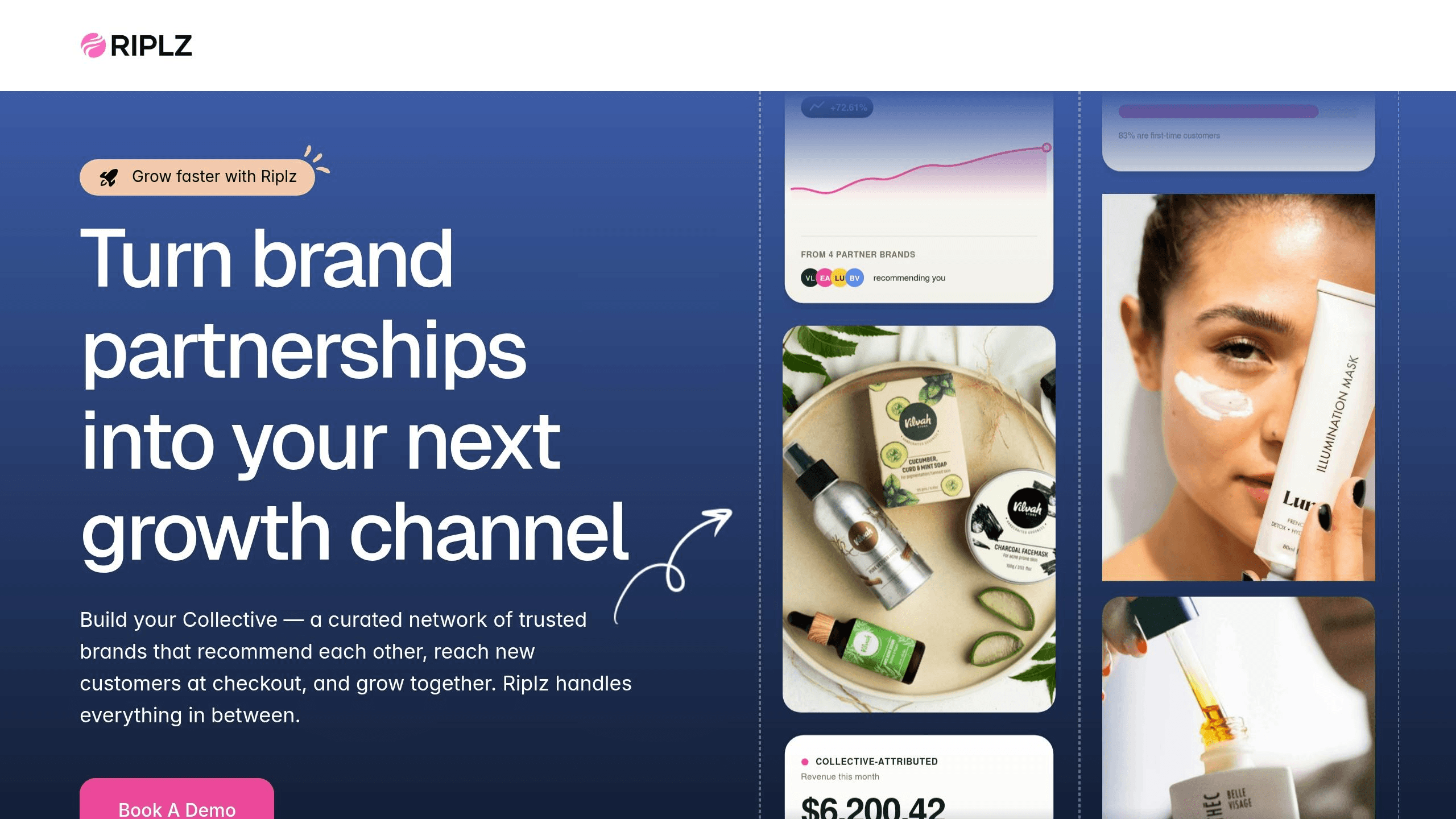
For busy DTC founders, managing brand partnerships manually - think cold outreach, negotiating terms, and tracking results - can feel like a massive time sink. Riplz was designed specifically for Shopify brands to solve this problem, making partnerships as measurable and scalable as any paid marketing channel. Its streamlined approach directly tackles the inefficiencies many founders face.
Riplz Features and Benefits
Riplz simplifies the partnership process with three standout features, turning it into a Collective Acquisition Channel. This allows DTC brands with shared values to connect and acquire customers from each other more effectively.
AI-driven partner matching: Finding the right partner is often the hardest part. Riplz uses AI to match brands based on audience overlap and shared values, ensuring partnerships are built on strong alignment. Research shows that brand alignment is the most important factor for successful collaborations [19].
Post-checkout customer acquisition: Instead of disrupting customers mid-browse, Riplz introduces your brand to shoppers right after they’ve completed a purchase - when their buying intent is at its peak. This post-purchase placement not only boosts engagement but also results in better long-term outcomes. Customers acquired this way show a 27% higher average order value and improved repeat purchase rates compared to those acquired through paid social channels [6].
Real-time performance tracking: Riplz offers a centralized dashboard to track key metrics like clicks, conversions, revenue, and AOV for each partnership. This transparency allows brands to quickly identify high-performing relationships and adjust strategies as needed [19].
Cost Efficiency: Riplz vs. Paid Ads
Riplz doesn’t just make partnerships easier - it’s also a more cost-effective alternative to traditional paid advertising. With rising Meta CPMs and declining ROAS, many DTC brands are struggling to maintain profitability. In fact, 68% of DTC founders reported that their blended CAC exceeded their AOV for at least one quarter in 2025 [6]. Clearly, a smarter acquisition strategy is overdue.
Here’s where Riplz stands out: it operates on a revenue-share model (typically 15–25%), meaning you only pay when a sale is made. Unlike paid ads, there’s no cost for impressions or clicks that don’t convert [6]. When you account for factors like blended CAC, creative expenses, and attribution challenges, Riplz partnerships are 40–70% more cost-efficient than paid social [6]. This makes it an attractive option for DTC brands looking to grow without breaking the bank.
Conclusion: Picking the Right Strategy for Your DTC Brand
There is no one-size-fits-all solution — your choice depends on your brand's stage and growth objectives. Paid ads are great for speed and precision. But the results stop the moment you stop spending, and climbing CPMs make it harder to justify long-term reliance on ads. [1] [18]
On the flip side, brand partnerships offer lasting value. Customers brought in through partnerships tend to stay loyal, spend more, and are more likely to make repeat purchases compared to those acquired via paid social. That kind of long-term payoff is hard to achieve with ads alone. The hybrid model allows you to take advantage of both channels, scaling them according to results after initial test marketing.
This comparison underscores the importance of aligning your strategy with your goals. As Hyperr Volt puts it:
"The question is not which is better. The question is what you are trying to accomplish, and which channel is better suited for that specific goal." [3]
These insights provide a roadmap for matching your budget to your growth stage.
Key Takeaways
Early-stage brands earning between $500K and $2M should prioritise performance marketing — around 75% of their budget — to keep cash flow steady. Brands scaling beyond $10M can shift up to 45% of their spend toward brand-building and partnerships to offset rising acquisition costs. [7]
Paid ads excel at speed and precision but require constant investment.
Brand partnerships deliver compounding value and higher customer lifetime value.
Hybrid strategies — seeding creator content and amplifying with paid media — combine both strengths.
Track the right metrics: CPA and ROAS for paid ads; CLV and repeat purchase rate for partnerships.
Evaluate partnerships over at least 6–12 months for an accurate ROI picture.
FAQs
How long does it take partnerships to beat paid ads on ROI?
What’s the best way to attribute revenue from partnerships?
How should I split budget between paid ads and partnerships?
Brand Partnerships vs. Paid Ads: Which Drives Better ROI?
Looking to maximize your marketing ROI? Here's a quick strategy comparison:
Paid Ads deliver fast, measurable results but rely on constant spending. They're ideal for short-term growth and precise targeting, though rising costs make scaling expensive – Meta's CPM’s having risen across most verticals (Triple Whale 2025 data shows median CPM of $13.48). [1]
Brand Partnerships build trust and long-term value. One mode through which this is achieved is through brands and creator partnerships – these outperform paid ads on repeat purchases by 20-35%. However, success takes time and strong partner alignment. [1]
Hybrid Strategies (like creator-driven ads) combine the strengths of both, often achieving higher CTRs and lower CPAs by blending trust with paid reach,. [2] [3] often delivering the best ROI.
Key Takeaways:
Paid ads are great for quick wins but stop working when the budget stops.
Partnerships create lasting impact through stronger customer retention.
Combining both methods often delivers the best ROI.
Bottom Line: If you're after fast results, paid ads are a solid choice. For sustainable growth, partnerships win. Using both methods strategically gives you a significant advantage
📣 Paid ADs Vs. Influencer Marketing... What's The REAL Scoop Here? Get The Info You Need 💡
Brand Partnerships and Paid Ads: What Sets Them Apart
Before diving into ROI comparisons, it's crucial to grasp how these strategies operate and what makes them distinct.
What Are Brand Partnerships?
Brand partnerships involve two businesses — or a brand and a creator — joining forces to achieve shared goals by leveraging their combined audiences, credibility, and resources. [8] These collaborations can take various forms, such as co-branded product launches, affiliate programs, or influencer-driven campaigns where creators introduce your product to their established followers.
What makes partnerships stand out is their approach to reaching people. Instead of disrupting someone's feed with ads, they build on the trust that already exists between the partner and their audience. Trust is a significant factor: 61% of consumers trust influencer recommendations, [9] and 69% trust suggestions from peers. [10] As David Yovanno, CEO of impact.com, explains:
"Partnerships hinge upon garnering a trusted, positive reaction from audiences, which is key to the beginning (and maintenance) of any impactful relationship." [8]
Another unique aspect of partnerships is how their impact grows over time. Unlike paid ads, which stop delivering the moment you stop spending, partnerships create a compounding effect. For example, Purple Carrot, a plant-based meal kit service, scaled its affiliate program to drive a 68% increase in orders and a 30% boost in ROAS in just one quarter. [8]
What Are Paid Ads?
Paid advertising is all about buying visibility on platforms like Meta, Google, or TikTok. Using bidding systems and algorithms, you set a budget, define your audience, and let the platform target users who either match your criteria or, increasingly, who the algorithm predicts will convert. There is no certainty that high intent users will be targeted.
This approach follows a linear model: you spend money, you get results - relative to the strength of your product and the ad itself. Stop spending, and the flow of traffic halts immediately. The performance of paid ads depends heavily on creative quality — on Meta, the ad creative accounts for three times more performance variance than audience targeting. [11] To keep up with ad fatigue — which usually sets in after 10 to 14 days — brands now produce 15–20 new creative assets every month. [11]
Paid ads do offer speed and control advantages that partnerships can't easily replicate: speed and control. You can launch a campaign today and start analyzing conversion data within 48 hours. However, this control comes at a rising cost.
ROI Compared: Metrics, Examples, and Key Differences
Measuring ROI effectively means using the right metrics for each strategy. Here's a quick breakdown of some of the most useful ones:
For paid ads, CPA and ROAS are the go-to metrics, focusing on short-term results. On the other hand, partnerships shine with metrics like CLV and repeat purchase rates, which require a longer time frame - think 6 to 12 months - to fully capture their value. Evaluating partnerships over just 30 days often misses the bigger picture [12].
Another key difference lies in attribution. Paid ads typically use last-click attribution, which is straightforward. Partnerships, however, involve a longer trust-building process, making multi-touch attribution essential to properly measure their impact [12][13].
Let’s see how these metrics play out with an actual example.
Case Study: Brand Partnerships vs. Paid Ads in Action
Take Purdy & Figg, a wellness brand based in the UK. In early 2026, they ran a 60-day Meta Partnership Ads campaign, promoting their products through creator accounts instead of their own brand page. The results were striking [3]:
555% increase in revenue
468% growth in purchases
35% lower CPA
What made the difference? It wasn’t just the budget - it was trust. Ads run through creator accounts combine the power of social proof with precise targeting, creating higher engagement. This approach doesn’t feel like traditional advertising, which is why it performs so well.
"A viral video with an affiliate link can provide a long-term play with way more money than you could have gotten from the flat fee." - Marie Montano, Senior Manager of Creator Relations, impact.com [14]
This example sets the stage for a direct comparison of strategies.
Comparison Table: Brand Partnerships vs. Paid Ads
The takeaway? Paid ads are all about speed, delivering quick results. But partnerships excel in efficiency and customer quality, especially over the long haul. The hybrid model - using creator content as paid ads - blends the best of both worlds, offering the short-term impact of ads with the lasting value of partnerships.
How to Get Better ROI from Each Strategy
Getting More from Brand Partnerships
Many DTC brands approach partnerships as one-off campaigns. However, the brands that see the best results focus on building ongoing relationships with partners who share similar values and target complementary audiences. A clear example being Dormify and American Eagle who are both targeting aesthetics driven 18–22-year-olds. [15]
Here’s a simple 30-day plan to kick things off: spend the first 10 days scouting and pitching 2–5 potential partners, the next 10 days drafting agreements and setting KPIs, and the final 10 days testing the collaboration before deciding to scale [16]. This step-by-step approach minimizes risk while providing real performance insights.
To keep costs in check, consider working with micro-influencers. On TikTok, creators in the 10,000–100,000 follower range typically charge $200–$1,500 per video [17] a fraction of the cost of macro or celebrity placements — while delivering approximately 60% higher engagement rates than mega-influencers and costing around 65% less per engagement than macro-influencers [18]. For DTC brands working with defined budgets, this makes micro-influencers the stronger choice for conversion-focused campaigns, where audience trust and niche alignment matter more than raw reach.
Improving Paid Ad Performance
Average Meta CPA across ecommerce ranges from approximately $30–$37 (MHI Growth Engine, 2026).", improving ROI on paid ads means focusing on creative strategies and smart budget management. [15] Creative content is your most powerful tool. Ads led by founders deliver an average ROAS that is 3.4× higher than traditional UGC and 62% higher than polished studio ads. [11] Across hundreds of DTC brands analyzed by MHI Media, founder-led creative generated the highest average ROAS among major ad formats, outperforming both traditional UGC and polished studio-produced ads.
Ads that start with question-based or pattern-interrupt hooks outperform product-first hooks by 2.4× in the first three seconds. [11] Since ad performance on Meta can decline by 50% within just 14 days, it is critical to refresh your creative every one to two weeks and test three to five new variations weekly. [11]
For budget allocation, try the 70/20/10 rule: dedicate 70% to proven channels, 20% to scaling initiatives, and 10% to testing experimental formats. [16] Establish ROI thresholds, like a minimum 2:1 ROAS for conversion campaigns, and use automated tools to redirect spending from underperforming awareness campaigns to high-performing bottom-funnel assets. [17]
Hybrid Strategies: Pairing Partnerships with Paid Ads
Combining the long-term value of partnerships with the quick results of paid ads can take your ROI to the next level. Instead of choosing one over the other, integrating them can deliver even stronger outcomes.
In 2026, A "seed and amplify" approach is gaining popularity in 2026. Start by collaborating with 10–30 micro-creators to generate a library of organic ad content. Then identify the top-performing 10–20% of posts and boost those using Spark Ads or Meta Partnership Ads. [2]
For instance, Crocs saw generated tens of millions in direct sales through Tiktok Spark Ads to amplify creator content instead of relying on traditional in-feed brand ads. [2] When negotiating with creators, make sure to secure usage rights upfront so their content can be repurposed for paid campaigns. [15]
"The brands achieving the highest ROAS in 2026 treat creator content as their top-of-funnel engine and paid ads as the amplification layer." - Syncly Social [2]
How Riplz Helps DTC Brands Build Better Partnerships
For busy DTC founders, managing brand partnerships manually - think cold outreach, negotiating terms, and tracking results - can feel like a massive time sink. Riplz was designed specifically for Shopify brands to solve this problem, making partnerships as measurable and scalable as any paid marketing channel. Its streamlined approach directly tackles the inefficiencies many founders face.
Riplz Features and Benefits
Riplz simplifies the partnership process with three standout features, turning it into a Collective Acquisition Channel. This allows DTC brands with shared values to connect and acquire customers from each other more effectively.
AI-driven partner matching: Finding the right partner is often the hardest part. Riplz uses AI to match brands based on audience overlap and shared values, ensuring partnerships are built on strong alignment. Research shows that brand alignment is the most important factor for successful collaborations [19].
Post-checkout customer acquisition: Instead of disrupting customers mid-browse, Riplz introduces your brand to shoppers right after they’ve completed a purchase - when their buying intent is at its peak. This post-purchase placement not only boosts engagement but also results in better long-term outcomes. Customers acquired this way show a 27% higher average order value and improved repeat purchase rates compared to those acquired through paid social channels [6].
Real-time performance tracking: Riplz offers a centralized dashboard to track key metrics like clicks, conversions, revenue, and AOV for each partnership. This transparency allows brands to quickly identify high-performing relationships and adjust strategies as needed [19].
Cost Efficiency: Riplz vs. Paid Ads
Riplz doesn’t just make partnerships easier - it’s also a more cost-effective alternative to traditional paid advertising. With rising Meta CPMs and declining ROAS, many DTC brands are struggling to maintain profitability. In fact, 68% of DTC founders reported that their blended CAC exceeded their AOV for at least one quarter in 2025 [6]. Clearly, a smarter acquisition strategy is overdue.
Here’s where Riplz stands out: it operates on a revenue-share model (typically 15–25%), meaning you only pay when a sale is made. Unlike paid ads, there’s no cost for impressions or clicks that don’t convert [6]. When you account for factors like blended CAC, creative expenses, and attribution challenges, Riplz partnerships are 40–70% more cost-efficient than paid social [6]. This makes it an attractive option for DTC brands looking to grow without breaking the bank.
Conclusion: Picking the Right Strategy for Your DTC Brand
There is no one-size-fits-all solution — your choice depends on your brand's stage and growth objectives. Paid ads are great for speed and precision. But the results stop the moment you stop spending, and climbing CPMs make it harder to justify long-term reliance on ads. [1] [18]
On the flip side, brand partnerships offer lasting value. Customers brought in through partnerships tend to stay loyal, spend more, and are more likely to make repeat purchases compared to those acquired via paid social. That kind of long-term payoff is hard to achieve with ads alone. The hybrid model allows you to take advantage of both channels, scaling them according to results after initial test marketing.
This comparison underscores the importance of aligning your strategy with your goals. As Hyperr Volt puts it:
"The question is not which is better. The question is what you are trying to accomplish, and which channel is better suited for that specific goal." [3]
These insights provide a roadmap for matching your budget to your growth stage.
Key Takeaways
Early-stage brands earning between $500K and $2M should prioritise performance marketing — around 75% of their budget — to keep cash flow steady. Brands scaling beyond $10M can shift up to 45% of their spend toward brand-building and partnerships to offset rising acquisition costs. [7]
Paid ads excel at speed and precision but require constant investment.
Brand partnerships deliver compounding value and higher customer lifetime value.
Hybrid strategies — seeding creator content and amplifying with paid media — combine both strengths.
Track the right metrics: CPA and ROAS for paid ads; CLV and repeat purchase rate for partnerships.
Evaluate partnerships over at least 6–12 months for an accurate ROI picture.
FAQs
How long does it take partnerships to beat paid ads on ROI?
What’s the best way to attribute revenue from partnerships?
How should I split budget between paid ads and partnerships?
Bring Passion. Get Growth, Support.



Where Ecommerce Brands Grow Together
Riplz connects values-aligned brands into Collectives that drive emails, sales, and lasting customer relationships
Book a Demo
Where Ecommerce Brands Grow Together
Riplz connects values-aligned brands into Collectives that drive emails, sales, and lasting customer relationships
Book a Demo
Where Ecommerce Brands Grow Together
Riplz connects values-aligned brands into Collectives that drive emails, sales, and lasting customer relationships
Book a Demo